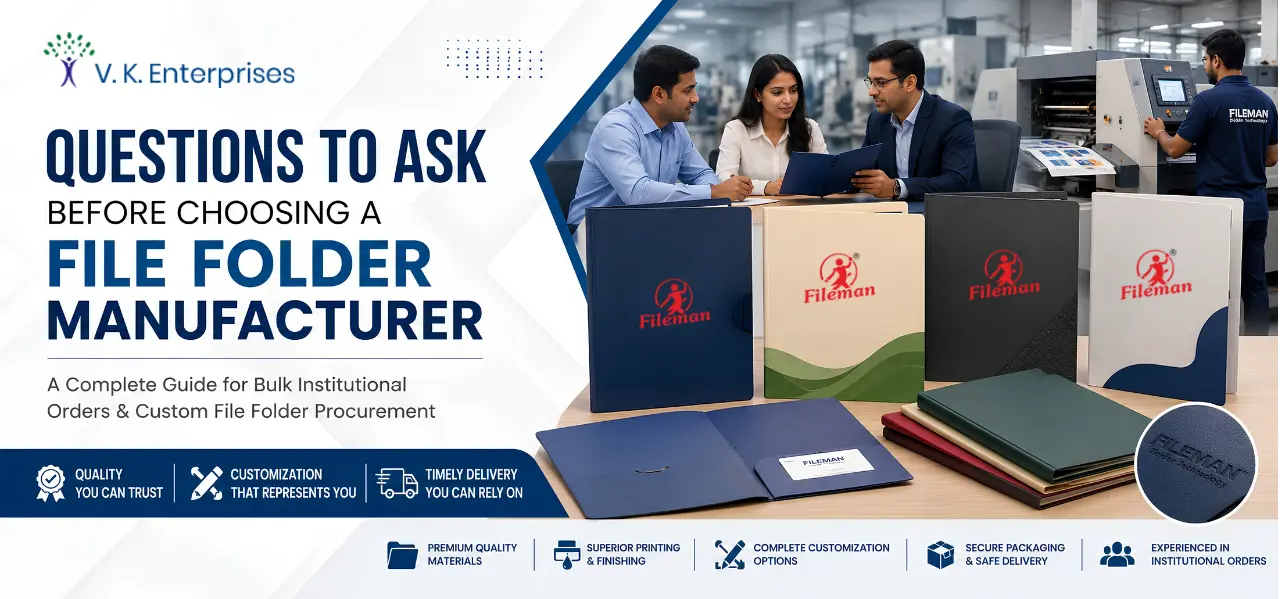
When institutions place a bulk order for file folders, they are not simply purchasing office supplies — they are investing in organization, professionalism, and brand identity. Whether it’s a university, corporate office, hospital, or government institution, the quality of file folders can leave a lasting impression.
However, selecting the right file folder manufacturer requires more than comparing prices. Buyers need to evaluate quality, customization capabilities, delivery timelines, and reliability before making a decision.
Why Choosing the Right File Folder Manufacturer Matters?
A dependable file folder supplier ensures consistent quality, timely deliveries, and smooth bulk order management. Asking the right questions before placing an institutional order can help avoid delays, poor-quality products, and unexpected costs.
Important Questions to Ask Before Placing a Bulk Order
1. What Is the Minimum Order Quantity (MOQ)?
MOQ is one of the first things institutional buyers should discuss with a manufacturer. Some suppliers only handle large-volume production, while others offer flexibility for medium-sized orders.
Understanding MOQ helps institutions manage budgets and inventory efficiently.
Why MOQ Matters
- Prevents over-ordering
- Helps estimate overall cost
- Ensures the supplier matches your requirements
2. Do You Offer Customization Options?
Institutions often require customized file folders with logos, colors, and branding elements. A good manufacturer should provide flexible customization services.
Common Customization Features
- Logo printing
- Custom colors and designs
- Embossing and foil stamping
- Different folder sizes
- Pocket and slot customization
Customized file folders help institutions maintain a professional and consistent brand image.
3. Can You Provide Material Samples?
Before confirming a bulk institutional order, always request product samples. Samples allow buyers to evaluate the actual quality of the file folders.
What to Check in Samples?
- Material thickness
- Durability
- Print quality
- Finishing and texture
- Colour accuracy
This step minimizes the risk of receiving poor-quality products during mass production.
4. What Printing Technology Do You Use?
Printing quality directly affects the appearance and durability of file folders. Poor printing can fade quickly and impact the institution’s professional image.
Ask the manufacturer whether they use:
- Offset printing
- Screen printing
- Digital printing
Also confirm whether the print is resistant to scratches, moisture, and fading.
5. What Are the Production and Delivery Timelines?
Timely delivery is essential, especially for institutions planning events, admissions, conferences, or internal operations.
Ask clear questions about:
Delivery and Production
- Standard manufacturing timeline
- Delivery schedule for bulk orders
- Urgent or rush order support
- Packaging and shipping process
Reliable file folder manufacturers maintain transparency regarding timelines and logistics.
6. What Is Included in the Pricing?
Low pricing may sometimes exclude important services. Institutional buyers should always ask for a detailed quotation.
Clarify These Costs
- Printing charges
- Customization fees
- Packaging costs
- Transportation charges
- Taxes or hidden expenses
Transparent pricing helps institutions avoid unexpected financial surprises later.
7. Do You Have Experience with Institutional Orders?
Manufacturers with institutional experience generally understand the importance of consistency, bulk production management, and professional quality standards.
Ask for:
- Previous institutional clients
- Industry experience
- Bulk production capacity
- Testimonials or sample projects
An experienced supplier is more likely to handle large orders smoothly and professionally.
Choose the Right File Folder Manufacturer with Confidence
Selecting the right file folder manufacturer is not just about finding the lowest price. It’s about choosing a supplier that delivers quality, customization, reliability, and long-term support. By asking the right questions before placing a bulk institutional order, organizations can make informed purchasing decisions and ensure better value for their investment.